

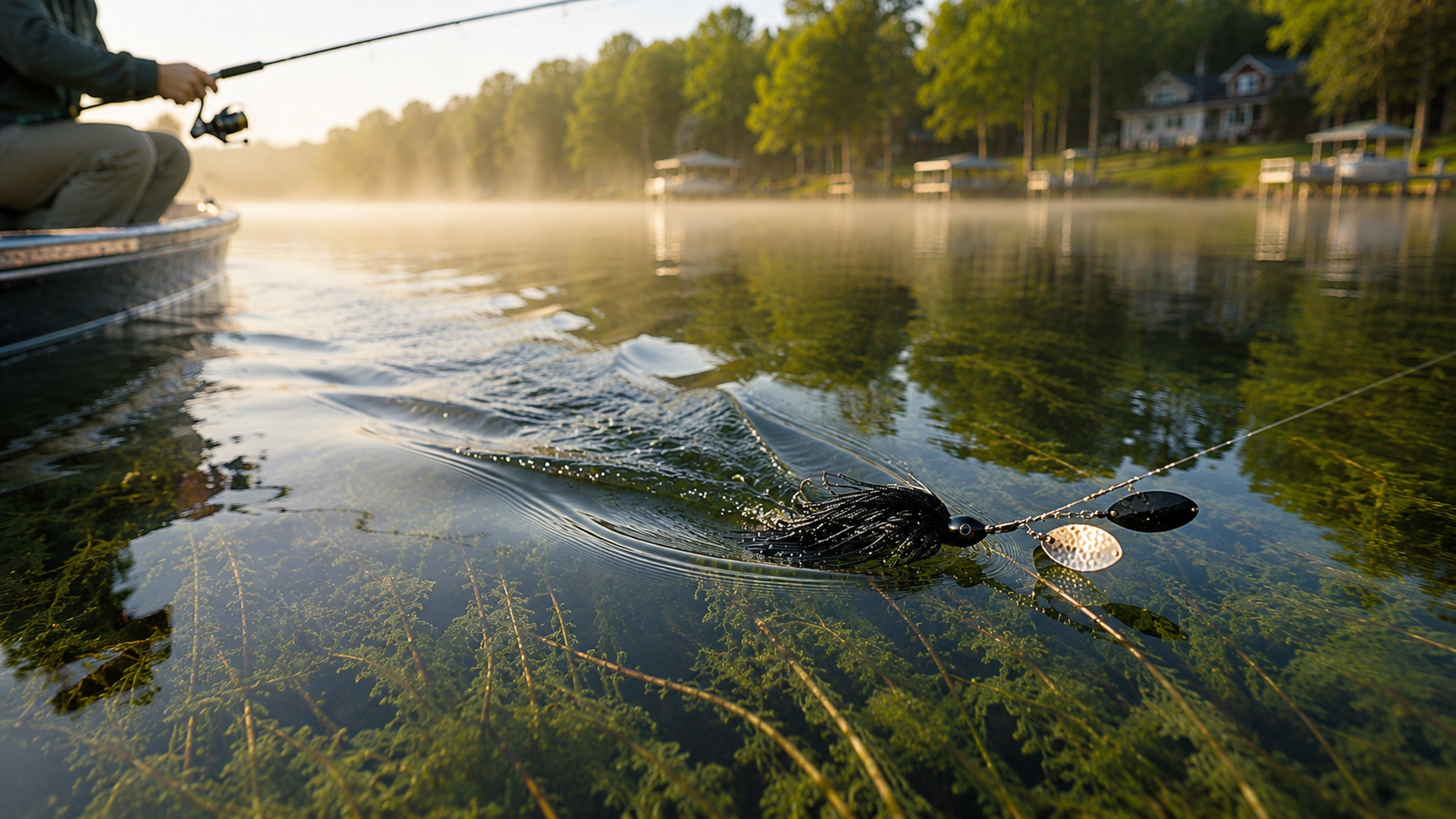
Bucktail lures work for muskie because they combine flash, vibration, and steady movement to trigger reaction strikes. They’re especially effective when retrieved along deep weed edges, rock transitions, and other ambush points during summer. A consistent retrieve and finishing every cast with a wide figure 8 can dramatically increase your chances of turning follows into hookups.
I heard the usual warning about muskies long before I hooked one: “10,000 casts” for a fish. Then one ate a bucktail in the first 50 casts on Lake Webster. That kind of start makes you stop and ask a fair question.
Was it luck, or did the lure, the timing, and the spot line up? Most quick muskie bites happen when those things meet, and bucktails are good at making that happen along weed edges.
Key Takeaways
- Bucktail lures work because they throw flash, vibration, and speed in one simple package.
- On summer water in the mid 60s and up, they are a strong search bait for active muskies.
- Deep weed edges and transition lines often matter more than endless blind casting.
- A steady retrieve and a clean figure 8 can turn follows into fish.
Why bucktail lures are so good for muskies
Once summer water gets above about 65 degrees, a bucktail is often a smart first choice. It covers water fast, shows up well, and gives muskies a moving target near weeds, rock, and other edges.
The action that gets a muskie to strike
Spinning blades do two jobs. They flash, and they push water. The hair or skirt pulses behind them, so the bait looks alive even on a plain retrieve.
That matters because muskies often don’t inspect a bait for long. They react to size, vibration, and motion.
Why bucktails stand out in real water, not just in theory
Bucktails are not hanging on because of nostalgia. They still work because they let you search long stretches of good water without slowing down. When fish want a moving bait, few lures do that job more simply.
🎣 Did You Know?
Bucktail lures have been catching muskies for more than a century. While lure materials and blade designs have evolved, the basic formula of spinning blades, vibration, and flowing hair has remained largely unchanged. Even with today’s high-tech swimbaits and glide baits, many experienced muskie anglers still tie on a bucktail first when searching large weed flats and deep weed edges because few lures cover water as efficiently.
What made the Lake Webster bite happen so quickly
That early fish probably was not random. The setup fit a common summer pattern on Lake Webster: low-70s water, deep weed edges, and a muskie cruising the outside line.
The right spot mattered more than pure luck
Muskies use weed edges and other transition areas like travel lanes. They also use them as ambush points. A good cast that tracks along the right edge can beat a pile of casts across empty water.
The retrieve probably sealed the deal
A slow roll or steady medium retrieve is often enough. The key is keeping the bait above the weeds, not burying it in them. A clean figure 8 at the boat matters too, because many muskies follow before they strike.
How to fish bucktail lures for better muskie odds
Start simple. Match the lure to the depth, the weeds, and the wind in front of you.
Choose the size that matches the water
Smaller bucktails, often #5 or #8 sizes, are useful in summer. Lighter versions work well over shallow weeds and in calmer water. A 3/4-ounce bucktail often tracks a foot or two down.
Go bigger or heavier on deeper edges or in rougher water. Colorado blades lift more. Narrow willow-style blades run deeper.
Do the figure 8 every time
The cast is not over at the boat. Keep the lure moving, make a wide figure 8, and change direction with purpose. That last turn often triggers the fish that would have followed and faded.
Bucktail Final Thoughts
That fast Lake Webster fish was probably not pure luck. It was a bucktail in the right water, at the right depth, with a retrieve an active muskie wanted.
The “10,000 casts” line sticks because muskies can be stubborn. Even so, you don’t need endless blind casting when you fish good water, keep the bait clean, and trust bucktail lures enough to fish them well.