
Quick Answer
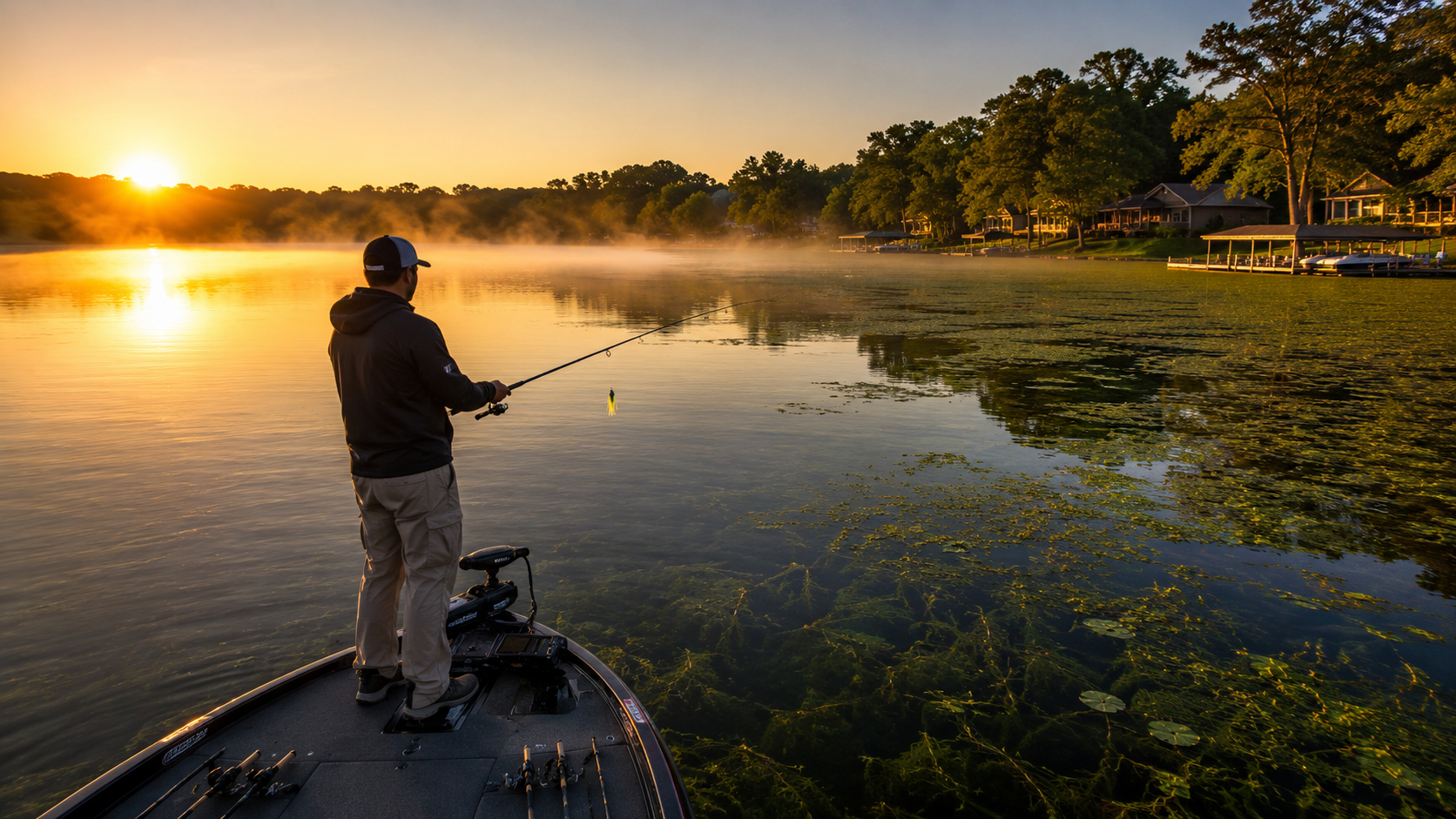
The most effective Lake Webster muskie patterns change with the seasons. Target shallow backwaters and channels in spring, weed edges and suspended baitfish in summer, and basin breaks during fall. Follow bait movement, fish key structure, and match lure speed to water temperature for the best chance at connecting with a Webster muskie.
Lake Webster Muskie Patterns
Some lakes give up a muskie now and then. Lake Webster keeps building legends because it packs deep basins, shallow weed flats, and connected backwaters into one fish-rich system.
If you want a muskie from Webster, blind casting won’t cut it. You need to track water temperature, bait movement, and season, because this lake rewards anglers who read the water and fish with intent.
What makes Lake Webster such a strong muskie lake?
Webster is one of Indiana’s best-known muskie waters for good reason. The main basin covers about 585 acres, and the connected waters, including Backwater Lake and Kaiser Lake, give fish room to spread out while still staying within the system. Indiana has stocked muskies here for decades, and the lake remains part of the state’s brood program. The Indiana DNR muskie report also notes a special 44-inch minimum size limit and a population that runs about six adult fish per acre.
That mix gives anglers two things they care about most, numbers and a real shot at a heavy fish. Webster doesn’t hand them out, but it keeps enough muskies in the lake for good decisions to be rewarded.
The structure that holds muskies
Webster has the kind of shape muskies like. Deep weed edges, drop-offs, shallow saddles, sheltered bays, and channel bottlenecks all give fish a place to feed, rest, and move.
The backwater culvert, island saddles, and points near deeper water are classic contact spots. A muskie can slide shallow to feed, then drop back a few feet and vanish. That’s why so many follows happen here, right when you think the cast is over.
The forage that keeps fish here
A muskie lake is only as good as its groceries. Webster has gizzard shad in open water, plus bluegill, yellow perch, and crappie around weeds and breaks.
When shad roam, some muskies roam with them over the basins. When panfish stack in cabbage and coontail, other fish pin themselves to the weed edge. Follow the bait, and you’ll shorten the lake in a hurry.
Did You Know?
Lake Webster muskies do not always sit tight to the bank. When gizzard shad move over deeper water, some muskies follow them away from the weed edges. That is why one of the best Webster patterns is checking both shallow cover and open-water baitfish before deciding the lake is “off.”
Where to fish on Lake Webster during each season
Webster changes by the month, so your starting spots should change too. As of June 2026, the lake is still in one of its better windows, and local guide patterns still point to late spring, early summer, and fall as prime muskie time.

Spring action in the backwaters and shallow channels
Early in the season, dark, shallow water warms first. That’s why Backwater Lake, the channel, and the culvert under Backwater Road draw fish before the main basin really wakes up.
Work 4- to 6-foot flats, last year’s weed remains, and any soft-bottom edge that gets afternoon sun. Fish are often sluggish then, so slow jerkbaits, twitch baits, and gliders earn more looks than loud speed baits. The best bite often comes later in the day, after the shallows have had time to warm.
Check out the 8″ Jerk KILR EEL. Spring muskies in Webster’s backwaters and channels are often sluggish after the spawn. The classic dive-and-rise action allows you to work the lure slowly with long pauses, keeping it in the strike zone longer. The KILR EEL has been my staple for a while because it excels when fish don’t want to chase aggressively.
Summer fish on weed edges and open-water basins
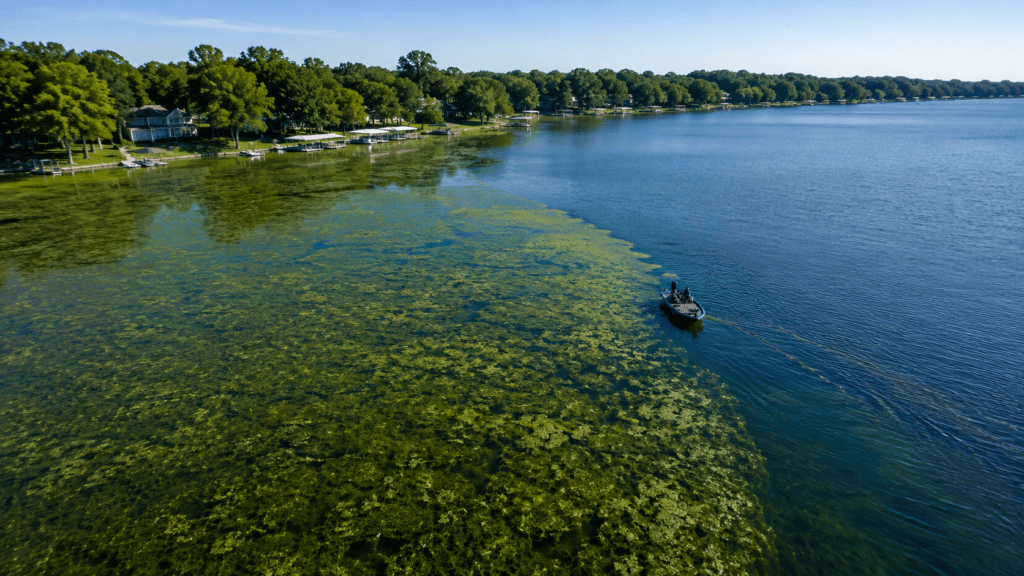
Once the water climbs into the upper 60s and low 70s, Webster muskies split up. Some live on the weed line, using cabbage, coontail, and pad edges as cover. Others suspend over deeper basins and trail shad in the upper part of the water column.
That means you should fish two lakes in one day. Hit weed edges at dawn and dusk, then check open-water fish when wind pushes bait. Low light matters, and so do cloudy skies, boat chop, and a falling-weather feel.
Try the The Berserker, Bucktail for summers. Summer Webster muskies frequently patrol cabbage edges, coontail beds, and outside weed lines. A double-blade bucktail covers water quickly, creates vibration, and helps locate active fish. It is especially effective during low-light periods when fish move shallow. Bucktails remain one of the most versatile muskie presentations available.
Fall muskies are feeding hard before ice-up
When water cools back under about 65 degrees, fish start eating with purpose. Green weed lines, basin edges, and sharp transitions become high-value water because bait is leaving dying weeds and bunching up.
This is when Webster grows shoulders on its muskies. Big females push onto edges, open-water fish follow shad harder, and short feeding windows can turn wild fast. Keep moving until you contact life, then slow down and work that zone.
Try the 8″/12″ Pike Musky Dawg Soft Plastic Swimbait for fall. Fall is the time to throw big meals. Webster muskies are feeding heavily before winter, and large rubber baits imitate the larger forage fish that big females target. The Musky Dawg can be ripped, paused, or worked along weed edges and breaklines where fall fish often stack up.
Best lures and retrieves for Lake Webster muskies
You don’t need a garage full of baits. You need a few tools that match the fish’s mood, water temperature, and pressure.
If I could only have access to a single lure it would be a Bucktail Spinnerbait. If I had to fish Webster for one day with one lure, it would probably be a Bucktail Spinner. It covers water, triggers follows, works around weeds, and shines during summer and early fall. It is one of the most influential muskie lure designs ever created and remains a go-to search bait for anglers across the Midwest.
Slow baits for cold water and postspawn fish
In spring and right after the spawn, slow wins more often than fancy. Small jerkbaits, glidebaits, and twitch-style minnow baits stay in the strike zone longer, and the pause is what gets bit.
Pull, let it hang, then move it again. Cold fish don’t want to chase far, but they’ll eat something that looks wounded and easy.
Fast movers for summer weed fishing
When weeds fill out, and fish turn active, cover the water. Double-blade bucktails, spinnerbaits, and topwaters let you find fish fast over shallow weeds and along outside edges.
Speed matters here, but control matters more. Burn a bucktail high over the weeds, then keep it clean through the turn. At the boat, always make a wide figure-8. Webster muskies follow hard, and many of the best bites happen beside the net.
Big fall baits for bigger bites
Fall is the time to throw a meal, not a snack. Large plastics, deep-running crankbaits, and other bulky baits match the season because muskies are feeding up before winter.
Fish them with confidence. Rip them over the edge, grind them into the break, and give the following fish one more move at boatside.
How to handle a Lake Webster muskie the right way
Muskies are tough fish until they aren’t. Warm water changes everything, as prolonged fights and rough handling can kill a fish after release.
When surface temps reach about 75 to 78 degrees, back off hard or stop targeting muskies.
Use heavy tackle so you can land fish fast. Keep the muskie in a large rubber net while you unhook it, and carry long pliers plus hook cutters. If you want a photo, support the fish flat with both hands and keep that moment short. Then hold it in the water until it kicks away on its own.
Frequently Asked Questions About Lake Webster Muskie Fishing
Is Lake Webster good for muskie fishing?
Yes. Lake Webster is one of Indiana’s best-known muskie lakes because it has stocked fish, connected backwaters, weed edges, deep-water access, and a strong forage base. It does not give up fish easily, but it gives prepared anglers a real chance.
What is the best time of year to catch muskies on Lake Webster?
Spring, early summer, and fall are usually the strongest windows. Spring fish often use warming backwaters and channels, summer fish split between weed edges and open-water bait, and fall fish feed heavily before winter.
Where should I start fishing for muskies on Lake Webster?
Start with places where shallow feeding areas meet nearby deeper water. Weed edges, channel openings, points, saddles, the backwater connection, and areas near baitfish are all smart places to begin.
What lures work best for Lake Webster muskies?
Bucktails, jerkbaits, glidebaits, twitch baits, spinnerbaits, topwaters, large plastics, and deep-running crankbaits all have a place. The key is matching lure speed and size to the season, water temperature, and fish mood.
Do Lake Webster muskies stay shallow all year?
No. Some fish use shallow weeds and channels, but others suspend over deeper basins when gizzard shad move offshore. That is why successful anglers often check both weed-related fish and open-water fish.
Why do muskies follow but not strike?
Muskies often follow because they are curious, pressured, or not fully committed. Changing speed, adding pauses, making a wide figure-8 at boatside, or returning during a better feeding window can turn a follower into a strike.
Should I fish for muskies on Lake Webster during hot weather?
Be careful. When surface temperatures climb into the mid-to-upper 70s, muskies can struggle after release. Many responsible anglers stop targeting them during warm-water periods or fish very early, land fish quickly, and release them without delay.
What is the size limit for muskies on Lake Webster?
Lake Webster has a special 44-inch minimum size limit for muskies. Always check the current Indiana fishing regulations before your trip because rules can change.
The Muskie Is Only Half The Puzzle
A Lake Webster muskie comes from pattern, not luck. Read the season, find the bait, and fish the spots that make sense for that day’s water.
Spring backwaters, summer weed edges, and fall basin breaks all tell a different story. Learn to hear each one, treat the fish right, and Webster will give you a real chance at the kind of muskie that sticks in your memory for years.