

Who counts as famous in a town as small as North Webster? Usually not movie stars or presidents. Here, the best-known names are tied to local building, civic promotion, and one major religious controversy that reached far beyond town limits.
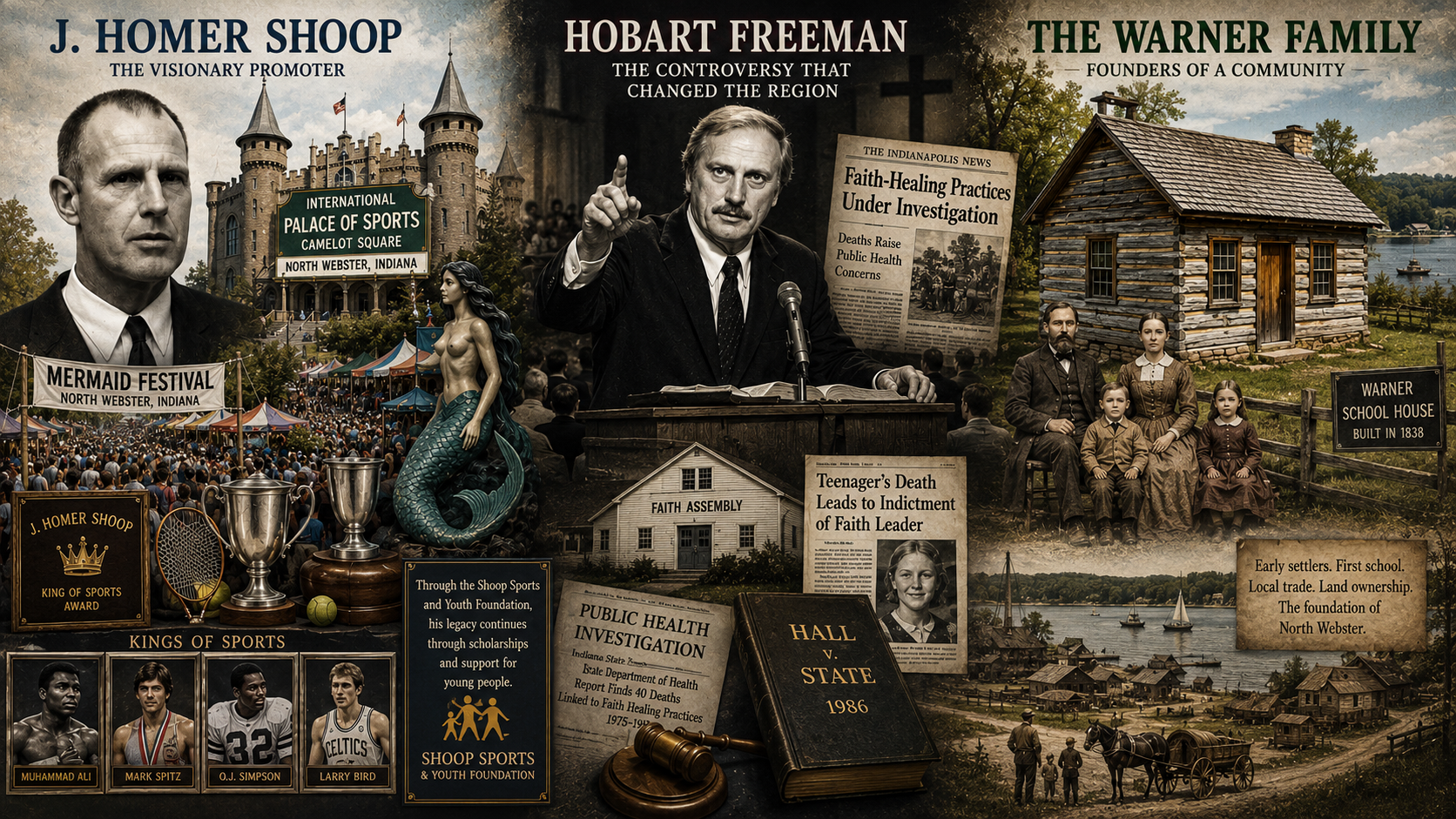
Three names come up again and again: J. Homer Shoop, Hobart Freeman, and the Warner family. Their stories still show up in festival history, scholarship funds, legal memory, and preserved landmarks. That’s where North Webster’s past gets interesting, and where it still feels close.
J. Homer Shoop and the sports legacy that put North Webster on the map

The banker who turned a small lake town into a sports destination
J. Homer Shoop mattered because he changed how people pictured North Webster. He was a banker and businessman, but he also had the instincts of a promoter. After taking control of Farmers State Bank in the late 1940s, he became one of the town’s biggest public boosters.
North Webster already sat in a region shaped by boating, cottages, and summer travel, part of the wider history of northern Indiana’s resort lakes. Shoop pushed that identity harder. He backed the Mermaid Festival, supported the Queen of Lakes pageant, and helped turn the town’s image toward spectacle.
By the early 1970s, that ambition had a look and a name. Shoop renamed his bank The Counting House Bank, built Camelot Square, and tied the area to a Camelot theme. He also pushed the International Palace of Sports, a castle-like attraction that opened in 1974 and brought famous athletes and heavy publicity to a small lake town.
The festival itself belonged to community groups, especially the Lions Club, and it had roots before Shoop’s rise. Still, he became one of its strongest boosters. That’s the key point. He didn’t invent North Webster, but he helped sell a bigger version of it.
Why his legacy still shows up in scholarships and youth support
Shoop’s longest-lasting legacy isn’t the old building. It’s the money and structure he left behind for young people.
The Shoop Sports and Youth Foundation continued after the Palace years faded. Scholarship support tied to Shoop still appears in local education and festival life, including the Camelot Scholarship Fund and Mermaid Festival scholarship programs. That means his name stayed connected to students, sports, and community projects, not only to tourism.
He also had a national profile in tennis and bridge, which gave his local projects more reach. But in North Webster, the lasting fact is simpler. Shoop used wealth, contacts, and civic ambition to build attention, then tied that attention to youth support.
Hobart Freeman and the controversy that changed how the region remembers faith healing
The message that put faith above medical care
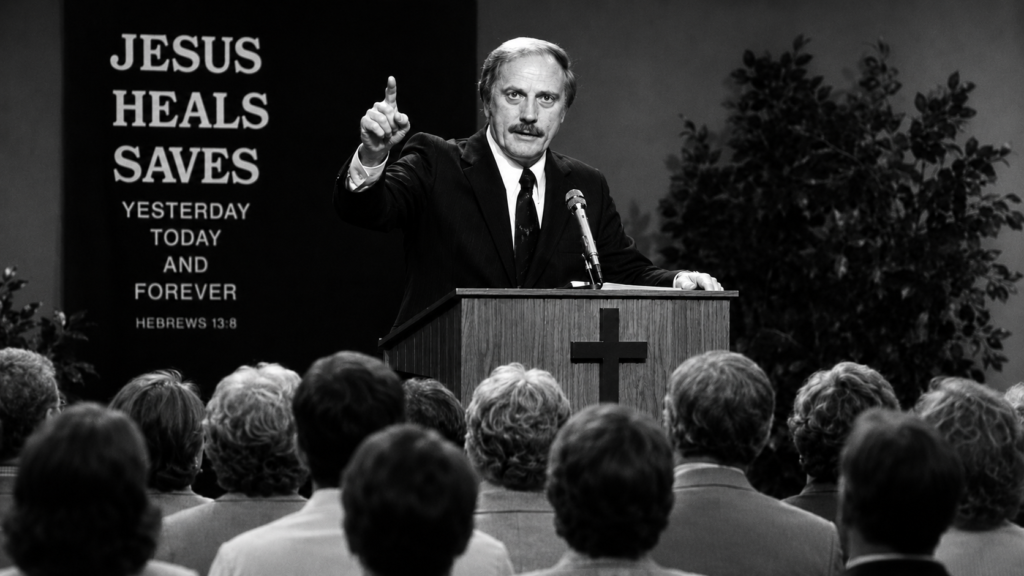
Hobart Freeman is famous for a different reason, and the story is much harder. He led Faith Assembly, a religious movement based in nearby Wilmot, with an earlier footprint in the North Webster area. His teaching on healing became the center of his legacy.
Freeman taught that true faith meant refusing doctors, medicine, and medical treatment. In that belief system, seeking care showed doubt in God’s power to heal. That idea quickly found its way into ordinary life, especially in illness, pregnancy, childbirth, and the care of children.
For followers, this wasn’t a side issue. It shaped daily decisions. A fever, a complicated birth, or a worsening infection could become a test of belief rather than a reason to go to a hospital.
Freeman’s place in local history comes less from church growth than from what happened when religious teaching collided with public health.
The deaths, investigations, and court cases tied to the movement
By the early 1980s, Indiana health officials were investigating deaths among members linked to this teaching. A 1984 federal and state public health report found 40 deaths among Indiana members from 1975 through 1982. Those included 21 perinatal deaths, seven infant and child deaths, six maternal deaths, and six other adult deaths.
The report also found mortality rates far above those of other Indiana residents in the affected counties. That is the factual core of Freeman’s legacy. It is a public health story, not only a church story.
Freeman was later indicted in connection with the death of 15-year-old Pamela Menne, whose untreated kidney failure became one of the best-known cases. He died in December 1984 before he could be tried. The legal debate did not end there. In 1986, the Indiana Supreme Court upheld reckless-homicide convictions in Hall v. State, showing that prayer-treatment defenses did not block criminal liability in severe neglect cases.
So when people remember Freeman in this region, they remember a movement that forced hard questions about faith, parental duty, and the limits of religious exemption.
The Warner family and the deeper roots of North Webster’s early history
Early settlers, first schools, and the start of town life
If Shoop shaped the town’s modern image, the Warner family sits much closer to its beginning. Family records and county histories place Henry Warner, Warren Warner, and their relatives in Kosciusko County in 1838, after time in Ohio and Cincinnati. They were not passing through. They stayed, built, and kept land.
Thomas K. Warner is tied to the first local school tradition. Local histories say he taught in the winter of 1838 to 1839, using an abandoned log cabin built by Warren Warner. The broader early county record, including this standard history of Kosciusko County, also places the family in early trade and village development.
The Warners show up in more than education. Thomas and Henderson Warner are linked to an early store in 1839, and other family members appear in accounts of village land interests. In plain terms, they were present where a settlement becomes a town, with a school, a store, land, and routine life.
The Warner School House and the family land that still matters
The exact school story has one small wrinkle. Some local accounts point to a first log-cabin school east of town, while preservation records focus on the surviving Warner School House, built by the family in 1838 on Thomas Warner’s land and soon used for schooling. Those details don’t line up perfectly, but the larger point does. The Warner family is at the center of North Webster’s early education story.
›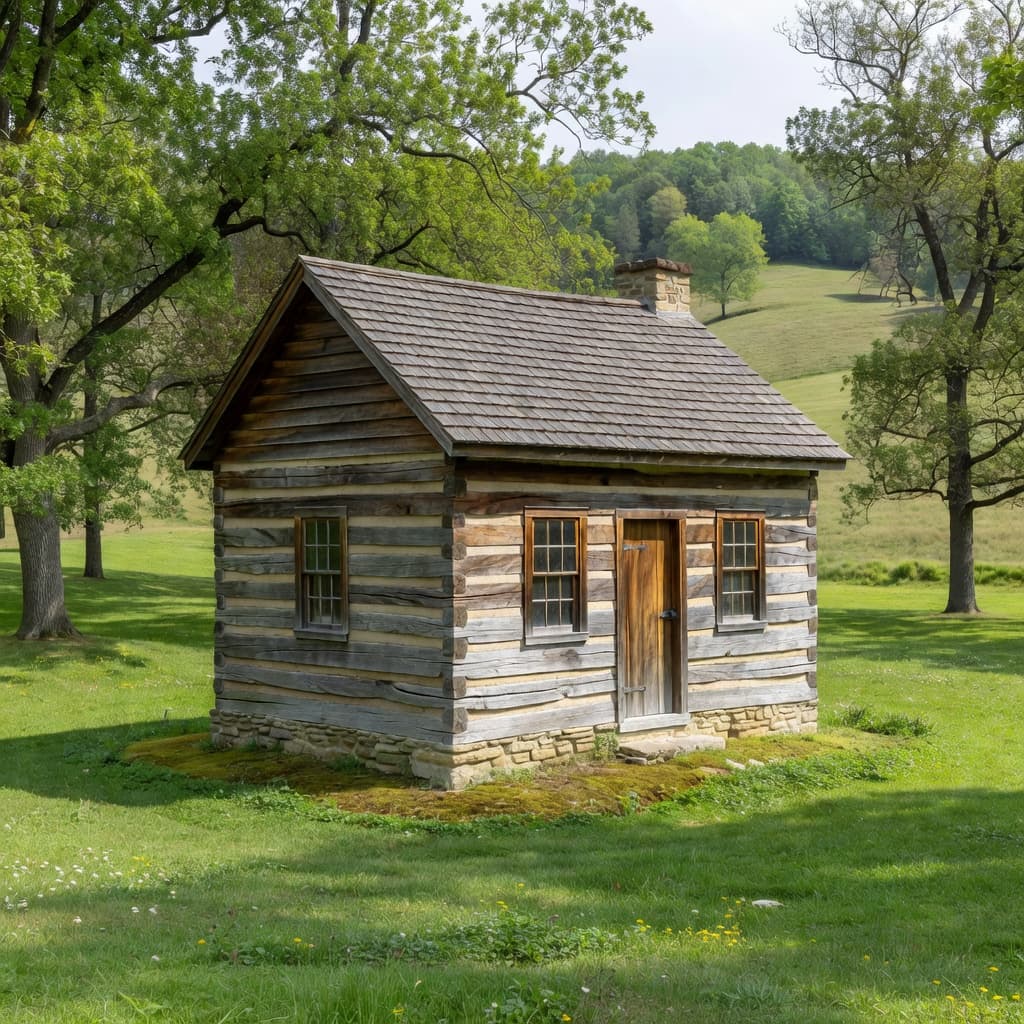
The schoolhouse still matters because it gives that early history a physical form. State preservation officials found it eligible for the National Register in 2021, and local preservation work has kept it visible.
The family’s land story matters too. Warner-owned Mid-Lake property remained associated with the family well into the 20th century. That long hold on land helps explain their place in local memory. They weren’t only early settlers. They were long-term builders of the area.
Conclusion
These three legacies don’t tell one simple story. They tell three layers of North Webster.
The Warner family is the foundation, early land, schooling, trade, and settlement. Shoop is the town’s modern public face, sports promotion, tourism, and scholarships. Freeman is the hard chapter, where religious authority met public health, death, and the law.
That mix is what makes North Webster’s history feel larger than its size. A small town can still carry a wide, complicated past.